
Lester Spence's "Knocking The Hustle"

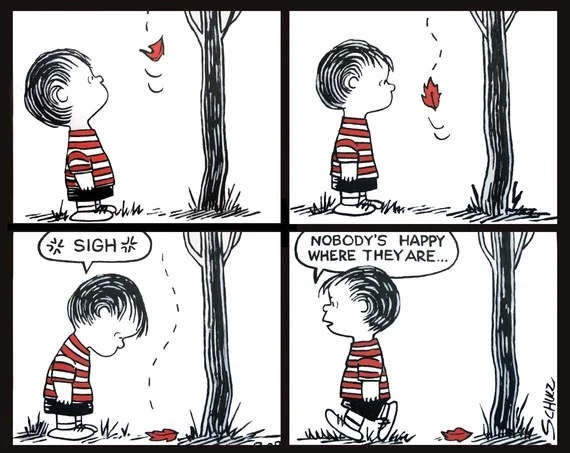
cartoon.jpg

I've been reading more about Lester Spence, a professor at John Hopkins University. His work is controversial. Although he is African-American, he frames political discourse in economic terms, such as pushing back against neoliberal capitalism, instead of identity, which has been the main political discourse in American politics. 

Because he is so out of the mainstream and pushes back against a lot of identity politics, his work is very contentious and incendiary. But I find a lot to like here. This passage from the link I found particularly enlightening and worth sharing: 

As Spence notes in his recently published book, Knocking the Hustle (Punctum), from the early 1970s to the present, American labor productivity has increased 80 percent while wages have stayed stagnant or declined. That we work more to earn as much as we once did—or even less—is a standard woe of the American economy in 2015. How these hip-hop celebrations of the hustler function in African-American communities, though, is what Spence finds disconcerting. Hustling is embraced as the appropriate adaptation to living in today's economy. The individual's having to learn whatever it takes to get by is a virtue in today's economy. Anybody who isn't constantly looking for ways to improve the return on his personal human capital simply isn't hustling enough. And for those people who are too lazy to maintain a level of at least subsistence hustle? Their failures and their poverty are a cul-de-sac of their own making. The black church will tell them that. Black elected officials and business elites will tell them that. Hell, Jay-Z himself will tell people that. In his song "Can't Knock the Hustle," he sneers at day-job drones who only work 9 to 5, "lunching, punching the clock."


Exercise, Depression And Staying Away From Antidepressants

Exercise, Depression And Staying Away From Antidepressants

Depression is on the rise in the United States. The common knowledge says that depression is organic and about chemical imbalances. But this cannot fully account for its stark rise in the general population. Many, including Johann Hari,  have proposed other theories about depression that resonant with me far more. This includes lack of community, lack of friendships, jobs we hate, trauma and more. 

Antidepressants are also used to treat depression. There is no doubt that they have helped many, and I think they are useful and should be prescribed for deep depressions. But too often they are prescribed like candy to anyone going through a little sadness. Any PCP with little understanding of mental health can prescribe you one. 

The truth is depression is mostly telling us something about our lives. It's saying we don't have enough connection in some way. And because physical health and mental health are definitely not as separate as we might think, depression often times can be telling us that we aren't taking care of our bodies. 

Existential Dread: The Struggle And Search For Meaning

Existential Dread: The Struggle And Search For Meaning

A friend of mine is really struggling with anxiety. It's not your typical anxiety. It's a deep existential anxiety. This person no longer sees the point of living. 

"What's the point? I know people who work at restaurants and have been doing that for years. They hate it," they told me recently. " But it's what works for them. Imagine doing that for the next 40 years. And then dying... you die. What is that for? What did it mean? Nothing, right?"

The truth is I largely agree with this as I told my friend. But it is a pessimistic viewpoint. Life might be meaningless in the grand sense. And yes, most of us do not get to control how we spend our time. And there's just an endless list of injustice in the world from climate change to vast inequality to the American prison system. But it is not the only thing. 

Marx and Free Trade

free-trade-cartoon1.jpg

I wanted to write something today to keep a consistent habit, but have been struggling for a topic. So I thought I'd post this Marx quote from the "Communist Manifesto": 

“The bourgeoisie has resolved personal worth into exchange value, and in place of the numberless indefeasible chartered freedoms, has set up that single, unconscionable freedom—Free Trade. In one word, for exploitation, veiled by religious and political illusions, it has substituted naked, shameless, direct, brutal exploitation.

The bourgeoisie has stripped of its halo every occupation hitherto honored and looked up to with reverent awe. It has converted the physician, the lawyer, the priest, the poet, the man of science, into its paid wage laborers.

The bourgeoisie has torn away from the family its sentimental veil, and has reduced the family relation to a mere money relation.”
— Communist Manifesto

I read this book when I was 18 or 19 and liked it but reading this quote now was sort of an "A-ha" moment for me. So much of what I've been thinking about and writing about in recent times has focused on the profit motive and how it twists our values into naked exploitation and how it robs us of our humanity and wrecks havoc on our mental health.  So much of what I believe about therapy and mental health has changed in the last year, which sees our mental health crisis as a symptom of a sick society that values individualism, competition, and materialism above all else.

But apparently, my ideas aren't that innovative haha. Marx said it better than I ever could 170 years earlier. It's a bit humbling to realize this again but has motivated to return to his writing and distill any more wisdom I can get from it...

How You Work Is How You Worship

How You Work Is How You Worship

College was a strange time. We, my closest friends and I, were all over-the-top idealistic. We believed we could change the world. We had the right, moral ideas after all. We wanted to end suffering. Isn't that what wins out in the end? To help the suffering?  

It feels naive now, but I miss that idealism. It's much harder to muster up much enthusiasm now when most of us have struggled and suffered. It's hard to think about macro change when the micro, everyday mundanity of existence feels so hard. 

I remember many of my idealistic friends in college decided to pursue lucrative work in tech and finance after college. I often asked them with a bit of judgment, what happened to changing the world? Their answers were always the same. "When I make a lot of money, I can use that to help change the world." 

Almost 20 years later that idealism is mostly gone. Yes, they made money. But no, they hadn't used that money to change the world. What happened to them? It's what happens to everyone: we become trapped by our choices. 

When You Stop Meditating Consistently...

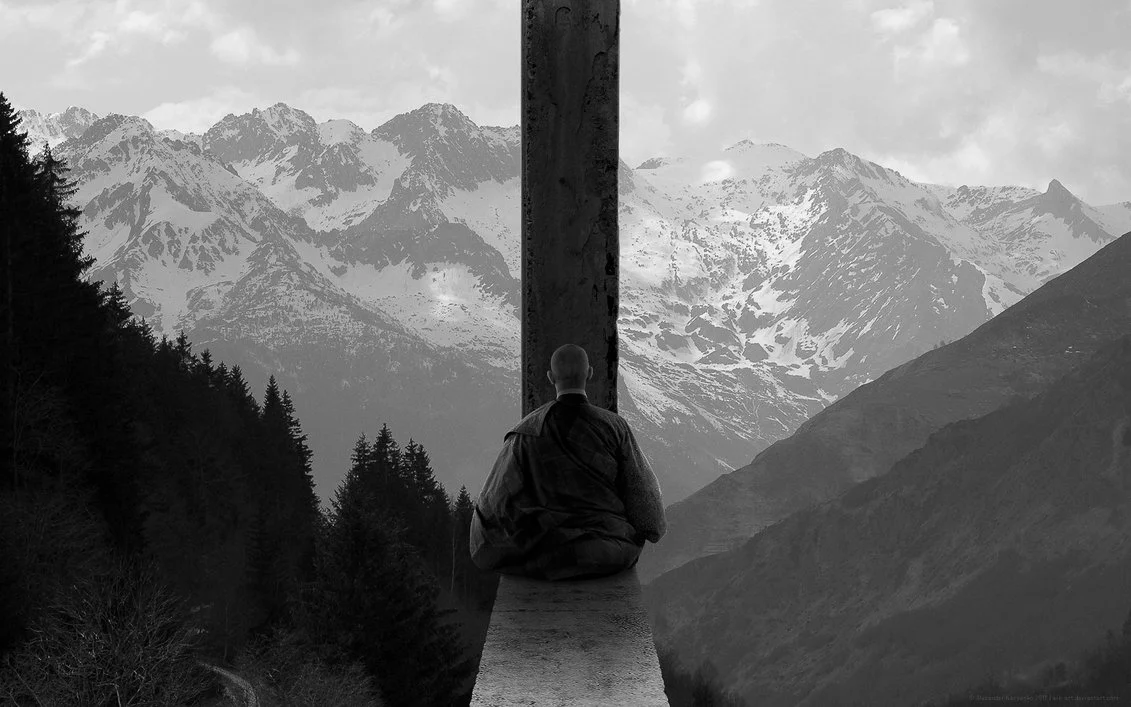
zazen_and_nature_by_aik_art-d3i4beg.jpg

There is an old Zen saying: You should sit in meditation for 20 minutes a day unless you’re too busy. Then you should sit for an hour. That saying always resonated with me because it speaks to the importance of meditation not only for relieving anxiety and being productive but for seeing the true nature of your mind and reality.  

But I haven't been meditating consistently. I could give you a lot of excuses or reasons. There has been lots of travel and change in my life recently for instance. Those are perfectly valid reasons... 

The odd thing about not meditating consistently is that you stop remembering what you are missing. Your mind turns into slush like most people's. Your attention span is much shorter. Your emotions pop around like a pinball. You're more susceptible to mood swings or giving into unproductive habits. But the thing is you're mostly unaware that you're doing it. 

And that is the real benefit of meditation: awareness. Awareness of your smallest movements or your breath. Awareness of what spikes your anxiety or what your temptations are. Awareness is key. Without awareness, we can become mindless, following our every urge or instinct with reflection. Without awareness, we can easily become the worst versions of ourselves. And it is that thought that always gets me to put meditation back on the calendar every morning even if I don't always do it. 

Why Do Most of Us Hate Our Jobs? Wage Labor, Universal Basic Income And The Search For Meaningful Work

Why Do Most of Us Hate Our Jobs? Wage Labor, Universal Basic Income And The Search For Meaningful Work

There's an anecdote in Johann Hari's seminal book, "Lost Connections," where he meets a man named Joe. Joe works in a paint shop. His job is simple: if a customer asks him for a particular shade of paint, Joe takes it to this machine, which shakes the paint vigorously until it is mixed. Then he takes your money and moves on to the next customer. Joe understandably feels like his job makes no difference, and he begins to go into a deep depression.

But Joe has dreams. He loves fishing. He has looked into becoming a fishing guide in Florida. It pays a lot less, but he feels like he would be happy, doing it. He doesn't have kids or a partner, so he has no obligations. So why doesn't Joe got to Florida? 

Secretly Joe is still addicted to an idea that seems central to America: that things will make him happy. He says in the book, "if I keep buying more stuff, and I get the Mercedes, and I buy the house with the four garages, people on the outside will think I'm doing good, and then I can will myself into being happy."  So Joe stays in his job and his depression deepens.

When Hari walks away from Joe, he calls out to him, "Go to Florida!" 

Why Does Goldman Sachs's Have a Diversity Program? The Hidden Problems of Diversity

Why Does Goldman Sachs's Have a Diversity Program? The Hidden Problems of Diversity

I found this website yesterday as I scoured the internet. It's a link to Goldman Sachs diversity program. I think most people unquestionably will think this is a good thing. There was a time when I thought it was a good thing as well.

But I see a problem here. It's not even that subtle a problem, but I think we as a society have been trained to look past it. Let me put it this way. Let's say Goldman Sachs achieves a perfect amount of diversity that aligns correctly with the U.S. Population. This means that 14% of their employees are black, just as 14% of the U.S. Population is black. And 50% of their employees are women, just a 50% of the U.S. Population are women. And so on and so on. 

I imagine that many of you would rejoice at this news. It would show you that America had started to achieve true equality through diversity. It would be proof that we had started to take the right steps forward in this country, that we were fulfilling the words of our constitution. 

The Neoliberal Meditator

The Neoliberal Meditator

A quick blog post before I start my next session...

One of the hallmarks of neoliberal spirituality is that each person is responsible for their own lives and should not look to governments or public institutions for answers. To put it into more libertarian terms, we are responsible for ourselves. Freedom is the ideal. We don't need want governments in our health care or schools because they run them inefficiently. Privatization has the answers. 

So what happens if you're having spiritual or mental health problems in this society? Well, like all things capitalism, the answers are in the free market. Take a look at your local bookstore and go to the self-help section. Business is booming. The free market can give you a wide range of gurus from misogynist Tony Robbins to the fraud that is Deepak Chopra.  Or if you're in the mood for a more wholesome figure, Oprah's Supersoul conversations are a great place to start. Here you can learn to be your best self and can live up to the demands of the competitive marketplace. All you have to do is meditate for peace of mind to be your best, productive self.

The Anxious, College-Educated Millennials

The Anxious, College-Educated Millennials

A quick blog post before I head out and enjoy the beautiful weather...

I've noticed a trend recently. I don't have any evidence besides anecdotal evidence though, so I've been hesitant to share my thoughts. But yesterday was a tipping point.

Anyway to the thesis: 

Millennials are anxious as hell. I know, I know, everyone is anxious as hell. But there is a particular strand of college-educated, millennial anxiety that seems born from our shitty neoliberal, unequal society. 

This anxiety comes from an odd place. It's often about productivity. Productivity is the mandate of capitalism. So many millennials are constantly worried about output in every aspect of their lives. It's as if the model of the factory worker has seeped into every aspect of our lives. And productivity and hard work are the symbols of meritocracy that doesn't really exist.

The lie that these millennials seem to believe more fiercely than older patients is that America is a place of equal opportunity. They believe that everyone is on an equal playing field and that if they work hard enough, their finances and status will improve. That's a lie for a lot of reasons, which I don't want to get into here, but upward mobility has been pretty nonexistence in America for quite a long time. But there is an implicit belief among the younger generation that the more you achieve, the better you are. One's self-worth then is directly tied to what one does and not who one is.