
Chance The Rapper's Verse on "Ultralight Beam"

Something a little less serious today. I had a few drinks Friday night and came home and listened to Kanye West's "Ultralight Beam." Besides a little singing, Kanye actually has very little to do with the song. It is Chance The Rapper song in the end. 

There's nothing quite like Chance's verse. The religious imagery, the seamless switching from gospel to rapping to gospel, the dexterity and pace of his cadence, the overall natural charisma of Chance, which is so rare. I'm not doing it justice. It's worth a listen when you get a chance. 

It's my personal favorite guest verse in hip-hop history. There are some obvious great ones. Snoop on "Nothing But a G Thang" comes to mind. Or Busta Rhymes on "Scenario." Or AZ on "Life's a Bitch." And I'm certainly missing about 100 worthy candidates. But almost no modern pop music songs capture a religious feeling like "Ultralight Beam." It's the kind of song I will be listening to in 20 years, and it will still sound fresh. 

The Moral Crisis of Rikers Island

The Moral Crisis of Rikers Island

Of the places I've visited in my life, Rikers Island is the closest to hell I could imagine. I used to visit about twice a month when I worked as a social worker for the Legal Aid Society so I could talk to my clients imprisoned there. 

The bus ride to Rikers is a long one, about 45 minutes from Long Island City, Queens. Eventually, you get to the entrance and cross a long bridge toward the island, which served as a sort of metaphor, a gateway from the safe city into a long descent toward Dante's hell. (It reminds me of the scene in Kurosawa's 'Rashomon" when the Woodcutter is followed through the woods toward evil).

Once you arrived, the corrections officers checked your credentials, and then you were off on another bus to one of Rikers many jails (There are 10 in total, each holding several hundred people in them). 

In Praise of Pantheism

In Praise of Pantheism

“I have repeatedly said that in my opinion the idea of a personal God is a childlike one, but I do not share the crusading spirit of the professional atheist whose fervor is mostly due to a painful act of liberation from the fetters of religious indoctrination received in youth. I prefer an attitude of humility corresponding to the weakness of our intellectual understanding of nature and of our own being.”- Albert Einstein

Just a quick blog post before I get back to real work...

I've been mulling over my religious views more lately as I've contemplated what a spiritual life looks like. Despite admiring some of its thought, I've found atheism or agnosticism lacking as a worldview, but the monotheistic ideas of a personal God are far worse and repellent to me at least as it can often promote the worst in human nature (i.e. see all of human history from the crusades to 9/11). 

I've found myself drawn to Buddhism as an adult because there are no creator gods. The goal is to end suffering. There are no strict dogmas, but useful list of guidelines to get there known as the four noble truths and the eightfold path. 

Does The Moral Arc of The Universe Actually Bend Toward Justice?

1-19-Martin-Luther-King-ftr.jpg

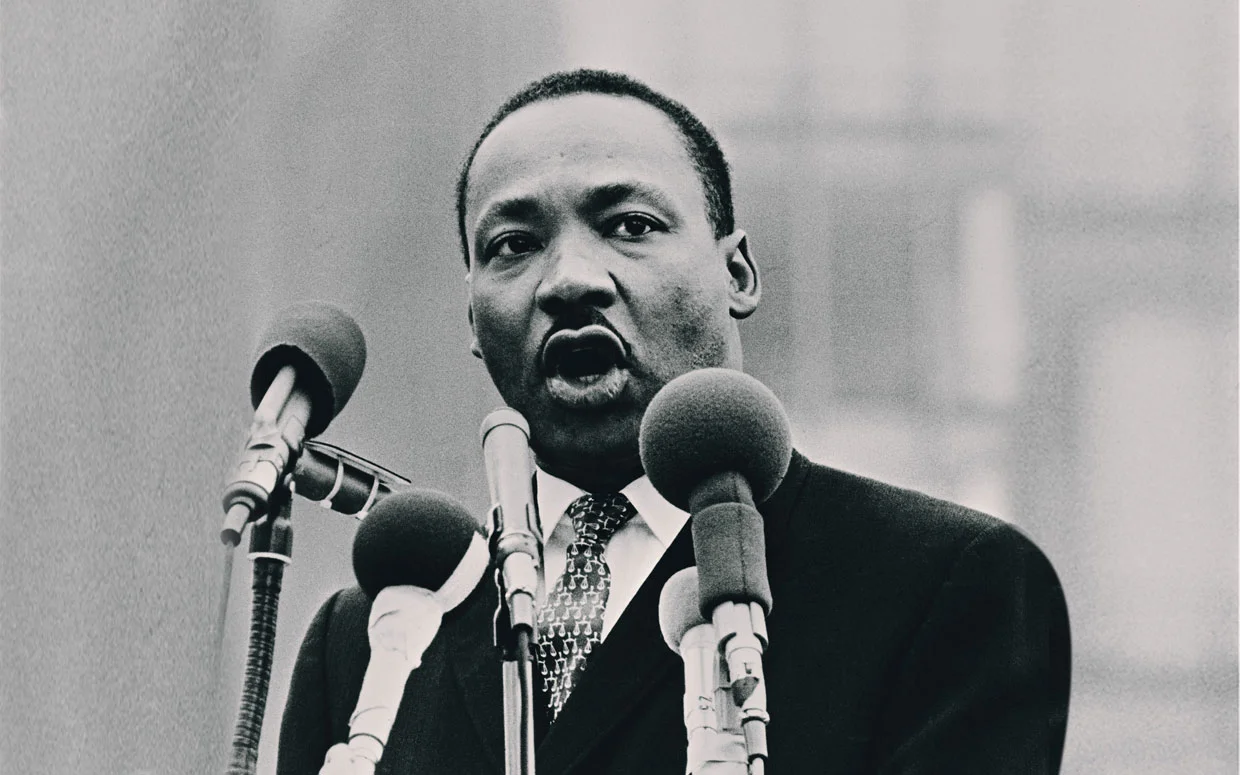
"The arc of the moral universe is long, but it bends towards justice." -Dr. Martin Luther King Jr. 

"The biggest story of the last fifteen years, both nationally and globally, is the growing likelihood that a cyclical model of history will be a better predictor than a model of ongoing progress." -Tyler Cowen

Just a quick little blog post before I start work...

That MLK quote above is much quoted. The words are often used to lend optimism to a troubling time, such as the current situation in the United States. I used to believe it wholeheartedly myself. After all look at the gains made by the civil rights movement that King help start? Look at LGBTQ rights? History is only going one way, and that is toward justice, I thought perhaps naively. 

I'm starting to think that is wrong. I just finished Tyler Cowen's "The Complacent Class," which the above quote is from, and he makes a very convincing argument that history is cyclical and any progress made often gets erased by the whims of time. 

Take the rise of fascism of in places like Hungary, Greece, and Italy. Or even the United States. Or how the gains in school segregation have been completely erased. Or how inequality is at its largest gap since the Gilded Age. These aren't old problems. They are just recycled from an earlier era and given new names like "neoliberalism" or "neofascism." 

It is quite possible after the end of Vietnam, the Civil Rights era and the fall of the Soviet Union, we were in an odd time of relative peace throughout the world. Yes, there was plenty of injustice still, but wars and violence have decreased drastically for the bulk of humanity in that time. But perhaps that time is over. Climate change is coming. Fascism is on the rise. Inequality is everywhere. Those factors are bubbling right at the surface. It is only a matter of time before it explodes. 

Absurdism And Camus's "The Nostalgia of Unity"

Absurdism And Camus's "The Nostalgia of Unity"

In the "Myth Of Sisyphus," Camus uses the term "nostalgia of unity" to describe rationalism. What does that mean? I've given it a lot of thought in recent weeks. So many of my patients deeply desire some narrative thread to their lives and closure to painful and horrible things that have happened to them. 

This is not a new insight. Viktor Frankel and more have discussed more have discussed the role in finding meaning in suffering and Narrative Therapy is built around the idea that we are fundamentally storytelling creatures, and that good therapy involves reframing our stories. Yuval Noah Harari makes it a central theme of his book, "Sapiens." 

But what Camus does to all forms fo narratives and unity is shatter them. He says that all human beings try to use their rationalism and logic to make sense of a world that doesn't make any. In a word: absurdity. It's absurd that a bomb could kill me today when I go to the subway station or that a friend could die in car accident. None of it really makes sense. 

The Rise Of High Deductible Insurance Plans: How Your Health Insurance Company Keeps Finding New Ways To Lessen Your Care and Make More Money

The Rise Of High Deductible Insurance Plans: How Your Health Insurance Company Keeps Finding New Ways To Lessen Your Care and Make More Money

I wanted to write a really short blog post about a phenomenon I've been noticing more and more in my work: the rise of high-deductible insurance plans. (If you're bored by this topic, may I suggest my last blog post).

What is a high-deductible insurance plan?

Essentially it's this: you don't actually get any health insurance until you meet deductible of several thousand dollars first. For most of us under 50, that means we are essentially getting no insurance even though we often pay a high monthly premium. 

How does this work? Let's say you go to a doctor for a bad back, for an annual physical and because you get pneumonia in a given year. And let's say all those doctor's visits total up to $2000. But unfortunately, because you have an ACA plan (otherwise known as Obamacare), your deductible is $3000. And that means you are fitting the bill for all those visits, despite paying a premium monthly of $250 or more a month. That's right, your insurance doesn't pay a thing. Quite frankly it's a joke. 

The Status Quo Is Not Good Enough: A Philosophy Of Grace

The Status Quo Is Not Good Enough: A Philosophy Of Grace

Being a "liberal" has turned into pejorative for me these days. It's a vacuous moral philosophy in my humble opinion, which falls apart when it's actually tested. Liberalism says that it believes in the liberty and equality regardless of race, class, gender or creed. But in reality, if many liberals are pushed, they turn out to be as conservative as anyone and will look for themselves or their tribe first and foremost. 

I see it in school segregation even in liberal Brooklyn Heights. Or in the Upper West Side.  Or in housing desegregation in this city.  The people who get to enjoy the American Dream often are reluctant give up any of it for the betterment of humanity. Only their family or tribe matters. Not the common good. 

Yes, I am a socialist and I think that's part of the solution. But it's really only a small part of it. I The bigger solution is a radical shift in values. Fundamentally I think that shift is religious in nature. This religious shift is not tied to any religion per se. I think of it as a philosophy of grace. 

Rollo May: Quotes From A Great Existential Psychotherapist

I've been reading some Rollo May and have been blown away by the depth and insight of his thought. I thought I'd share some of his quotes for you to enjoy: 

"Anxiety is an even better teacher than reality, for one can temporarily evade reality by avoiding the distasteful situation; but anxiety is a source of education always present because one carries it within." -The Meaning of Anxiety (1950)

"Therapy isn't curing somebody of something; it is a means of helping a person explore himself, his life, his consciousness. My purpose as a therapist is to find out what it means to be human. Every human being must have a point at which he stands against the culture, where he says, "This is me and the world be damned!" Leaders have always been the ones to stand against the society — SocratesChristFreud, all the way down the line." - As quoted in Marriage Today : Problems, Issues, and Alternatives (1977) by James E. De Burger, p. 444

The human being cannot live in a condition of emptiness for very long: if he is not growing toward something, he does not merely stagnate; the pent-up potentialities turn into morbidity and despair, and eventually into destructive activities.- Man's Search For Himself (1953)

Vanity and narcissism — the compulsive need to be admired and praised — undermine one's courage, for one then fights on someone else's conviction rather than one's own. - Man's Search For Himself (1953)

To love means to open ourselves to the negative as well as the positive — to grief, sorrow, and disappointment as well as to joy, fulfillment, and an intensity of consciousness we did not know was possible before.- Love and Will (1969)

Art is a substitute for violence. The same impulses that drive persons to violence — the hunger for meaning, the need for ecstasy, the impulse to risk all — drive the artist to create. He is by nature our archrebel. … the essence of the rebellion is in the new way of seeing nature and life. - Power and Innocent (1972)  

David Platt And Rejecting The American Dream

god_is_dead_by_deviantkupo.jpg

I don't have a lot of time or energy to write anything in depth today, but I wanted to share an interview with a pastor named David Platt, who is a Christian pastor out of Alabama. 

If you follow this blog at all, you'll know that I am no Christian. I do admire Jesus greatly but I generally think that Christianity has done far more harm than good on the earth. The message of the gospels has been bastardized throughout the centuries. And today in America, it has taken on maybe one of it's ugliest forms: the prosperity gospel.

I was drawn to the work of David Platt in part because he rejects the prosperity gospel and any reading of the bible based on material wealth. As he says in an interview with Christian Post: 

"There is obviously a cultural and historical disconnect between us, 21st century America, and the disciples in the first century. As a result of that, there are a lot of things that we tend to cloud our Christianity with that unknowingly, in many cases, miss the entire point of the gospel.

I think with the way we have unprecedented material blessing, with the way we have a culture built on self, self-esteem, self-confidence. All of these things we begin to twist the gospel into something that it is not. We make it look like us and fit into our lifestyle instead of adjusting our lifestyle to the gospel. In the process we make following Jesus more American than it is biblical. "

Platt's big insight, it seems to me, is that modern American culture and the classical liberalism of Edmund Burke is built on the edifice of the self; but that the spirit of Christianity has little of anything to do with the self. It has to do with sacrifice and surrender to a great power. 

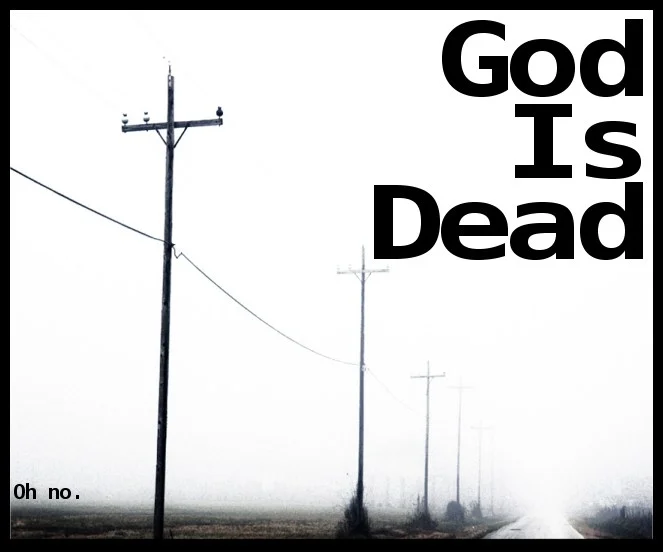
There's a lot to love about this notion. After all, every great religion at some point is built on submission of the ego to the power of a higher power. It's a quaint notion to have faith today, though, as God has died for many of us. But I wonder, maybe a new form of spirituality needs to be found where a higher power isn't the center... it's something I plan to write about for many years to come.  

The World Is Better Than Ever. Why Are We Miserable?

The World Is Better Than Ever. Why Are We Miserable?

Andrew Sullivan recently published an interesting piece in New York Magazine called, "The World Is Better Than Ever. Why Are We Miserable?" It is a topic I've written extensively about on this blog. 

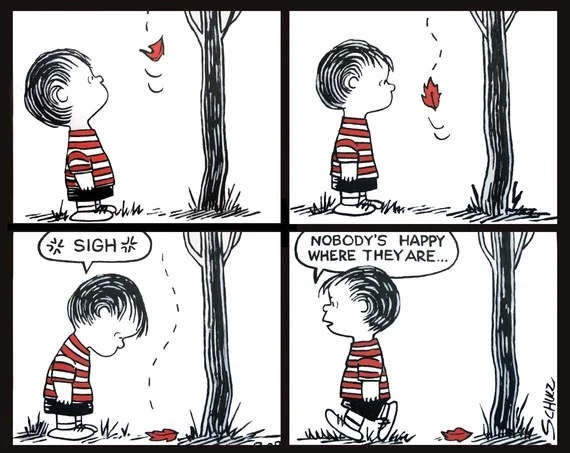
Sullivan wonders out loud if everything seems to be getting better, as Steven Pinker argues, why does everyone seem so unhappy? Why are drug use, anxiety, depression, loneliness so ubiquitous?  It's a great question. 

Sullivan's answer is

"As we have slowly and surely attained more progress, we have lost something that undergirds all of it: meaning, cohesion, and a different, deeper kind of happiness than the satiation of all our earthly needs. We’ve forgotten the human flourishing that comes from a common idea of virtue, and a concept of virtue that is based on our nature. This is the core of Deneen’s argument, and it rests on a different, classical, pre-liberal understanding of freedom. For most of the Ancients, freedom was freedom from our natural desires and material needs. It rested on a mastery of these deep, natural urges in favor of self-control, restraint, and education into virtue. It placed the community — the polis — ahead of the individual, and indeed could not conceive of the individual apart from the community into which he or she was born. They’d look at our freedom and see licentiousness, chaos, and slavery to desire. They’d predict misery not happiness to be the result."