
Sleep, the Simplest Mental Health Life Hack: 3 Ways Sleep Affects Your Mental Health

Sleep, the Simplest Mental Health Life Hack: 3 Ways Sleep Affects Your Mental Health

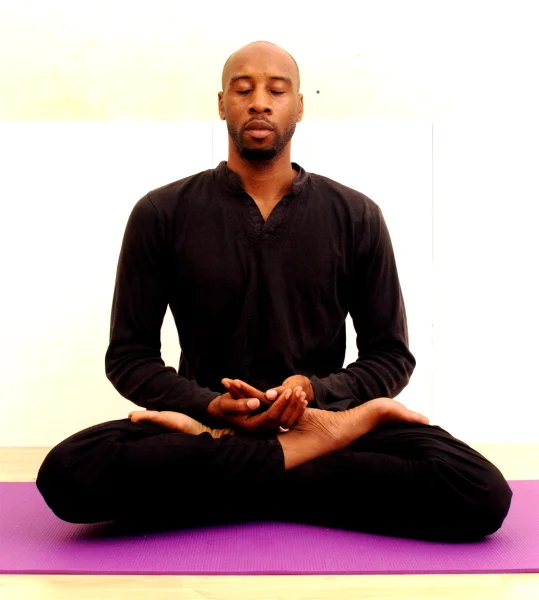
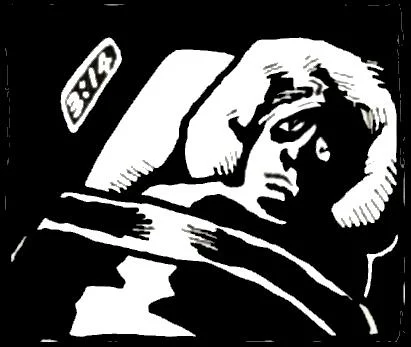
When I see someone for the first time in psychotherapy, and they talk about overwhelming anxiety, one of the first questions I always ask them is “How much sleep are you getting?” And almost always, it’s not enough.

We are a sleep-deprived culture. Some would even call it a public health problem. When I ask someone why they aren’t sleeping enough the answers usually revolve around 1) demanding work schedules; 2) addictions to their screens; 3) raising young children; 4) but also a lack of understanding of how important sleep is to one’s health and mental health.


What Is Broken Is What God Blesses

What Is Broken Is What God Blesses


I'm out of commission today because of dental surgery, so I don't have the strength or energy to write too much today. So instead I wanted to share this lovely poem I read recently by Jimmy Santiago Baca with you all. My next blog will be about the themes discussed in the poem on Tuesday. Enjoy! 

What Is Broken Is What God Blesses

Jimmy Santiago Baca, 1952

 The lover’s footprint in the sand
 the ten-year-old kid’s bare feet

Bicep Curls Are Dumb. Stop Doing Bicep Curls.

Bicep Curls Are Dumb. Stop Doing Bicep Curls.

I haven’t discussed it much on this blog, but fitness has become a bigger part of my life in the last two years or so. And like every fitness neophyte, I did set after set after set of bicep curls in the hopes of getting “ripped.” Turns out, I had no idea what I was doing. (Not surprising for me.)

Now two years later, after reading more and more about fitness, I’ve come to realize something: bicep curls are dumb. If you have a desire to have arms bigger than your head then the bicep curl is a great exercise for you. It’s almost strictly a vanity exercise. The bicep just isn’t that big or important a muscle in the end.

Learning to Sacrifice in a Capitalist World: 3 Ways to Consume Less and Push Back Against Greed

Learning to Sacrifice in a Capitalist World: 3 Ways to Consume Less and Push Back Against Greed

Recently I came upon this interesting bible verse,

“If anyone comes to me and does not hate father and mother, wife and children, brothers and sisters-yes, even their own life-such a person cannot be my disciple.”- Luke 14:26

I’m not a bible scholar or even a Christian, but I find this bible verse fascinating. Is Jesus telling us to hate everyone we care about, including ourselves? Somehow, I doubt that’s true. My sense is that this is a metaphor. Jesus is discussing the notion of sacrifice for a greater good (in this case, to follow him and give up their old lives.)

The notion of sacrifice is a strange one in today’s world in that no one seems to want to do it. Capitalism, in particular, encourages us “to get mine.” As one of my favorite Buddhist teachers, Noah Levine, said in a recent podcast, “Greed, Hatred, and Delusion are the norm. It’s compassion that’s in scarcity.”

The Gods Will Not Save You: Reflections on Meaning and Existence

The Gods Will Not Save You: Reflections on Meaning and Existence

“It’s Baltimore, gentlemen. The Gods will not save you.” - Commissioner Ervin Burrell, The Wire

A few years ago, I had to commute from Brooklyn to the Bronx for my job as a social worker at The Legal Aid Society. It was a hellish commute. What should have been a 50 minute to an hour commute, ended up being 75 minutes or longer on most days. (Anyone who lives in New York City can attest to the awfulness of the MTA.)

The only upside to the commute was that I read a lot of books and listened to a lot of interesting podcasts during that time. One morning I was listening to a Zen Buddhist podcast on WZEN. To be honest, I was barely listening. I was tired and a bit hungover. The day had not started yet, and I already wanted it to end.

Self-Care: What Does that Look Like?

 Self-Care: What Does that Look Like?

I just read this wonderful medium piece about self-care that I wanted to share.

I think there’s an assumption that self-care means checking out and disconnecting from the stresses in our life. My own tendency, as I’ve written elsewhere, is to grab a drink or watch a lot of TV to get my mind off things. Other people might go on a trip or a spa for the day and relax.

But I’m not sure any of those coping methods have ever made me feel better. What it does is push away all the feelings I want to ignore-- all that anxiety, stress and rejection that’s underneath, always percolating in my unconscious-- so I feel numb to any of it.  

Getting Unstuck: 5 Ways to Pull Yourself Out of a Rut When You've Become Complacent

Getting Unstuck: 5 Ways to Pull Yourself Out of a Rut When You've Become Complacent

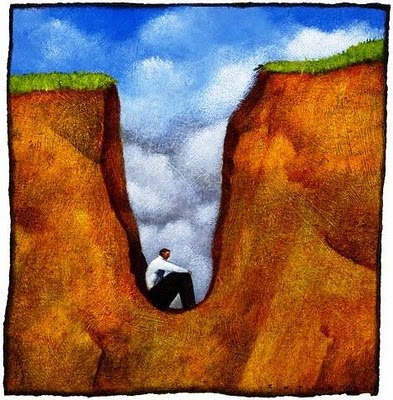
Recently I’ve been in one of my better creative periods in quite a long time. I have been reading more, as well as writing every day and planning a future podcast.  When I noticed how productive I had been, I wasn’t quite sure how it happened.

You see, I was in a rut for awhile. No new projects were being planned. Books were started and unfinished. I was enjoying a few too many beers and not enough time at the gym. I wouldn’t quite call it depression. I had just grown complacent.

In Praise of Laziness: Finding Joy in a Sea of Anxiety

In Praise of Laziness: Finding Joy in a Sea of Anxiety

I have often wondered whether especially those days when we are forced to remain idle are not precisely the days spend in the most profound activity. Whether our actions themselves, even if they do not take place until later, are nothing more than the last reverberations of a vast movement that occurs within us during idle days.

In any case, it is very important to be idle with confidence, with devotion, possibly even with joy. The days when even our hands do not stir are so exceptionally quiet that it is hardly possible to raise them without hearing a whole lot.”

Rainer Maria Rilke

5:1, The Magic Ratio for a Happy Relationship

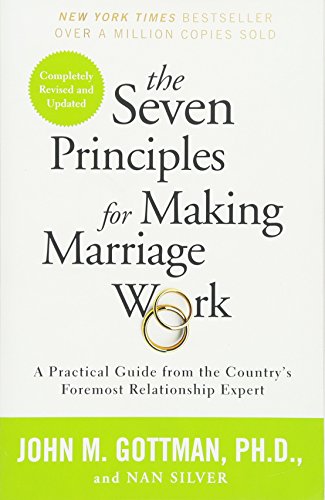
It seems obvious that having more positive experiences than negative ones in a romantic relationship is necessary for it to survive. But is there a way to actually quantify this? Relationship psychologist, John Gottman, believes he has found the answer. Using a mathematical model, he discovered: 

"The magic ratio is 5:1. In other words, as long as there are five times as many positive interactions between partners as there are negative, the relationship is likely to be stable. It is based on this ratio that Dr. Gottman is able to predict divorce! Very unhappy couples tend to have more negative than positive interactions. The bottom line: even though some level of negativity is necessary for a stable relationship, positivity is what nourishes your love. On Wednesday, we will investigate further into Dr. John Gottman’s “Magic Ratio” that has received national attention

This is not to say that a relationship with conflict is a bad one. Every relationship has disagreement. But learning how to turn your disagreements into positives where neither party is feeling overly criticized and understood is key.

And when you're not disagreement, it's important to keep the relationship healthy by finding ways to interact with each other in new and interesting ways. That can be hard with levels of anxiety so high in today's society. But to keep any relationship strong takes more work and self-reflection than social media world would have us believe. 

Anthony Tshering is a psychotherapist in the New York City area. Please contact him at (347) 927-4856 or atsheringlcsw@gmail.com if you'd like to set up a consultation appointment for therapy. 

Pay Attention, Pay Attention, Pay Attention: Five Ways to Reclaim your Attention in a Distracted World

Pay Attention, Pay Attention, Pay Attention: Five Ways to Reclaim your Attention in a Distracted World

“We seldom realize, for example that our most private thoughts and emotions are not actually our own. For we think in terms of languages and images which we did not invent, but which were given to us by our society.”

― Alan W. Watts

"The average American throws away 65 pounds of clothing per year." -Huffington Post


Early in Matthew Crawford’s “The World Beyond Your Head”  the author walks through an airport. Maybe for the first time, he notices the bombardment of advertising everywhere. There are the billboards and TVs. The signs of restaurants, the ads in his Forbes Magazine, the ads on the podcast he’s listening to or in front of the bathroom stalls. Even the backs of chairs have deals to the local hotels and clothing stores. Each is expertly designed to get his attention, designed by professionals who know just the right colors and sounds and fonts and pictures to get you to notice what they’re selling.